
End Mill Troubleshooting - End Mill And Milling Problems And Solutions
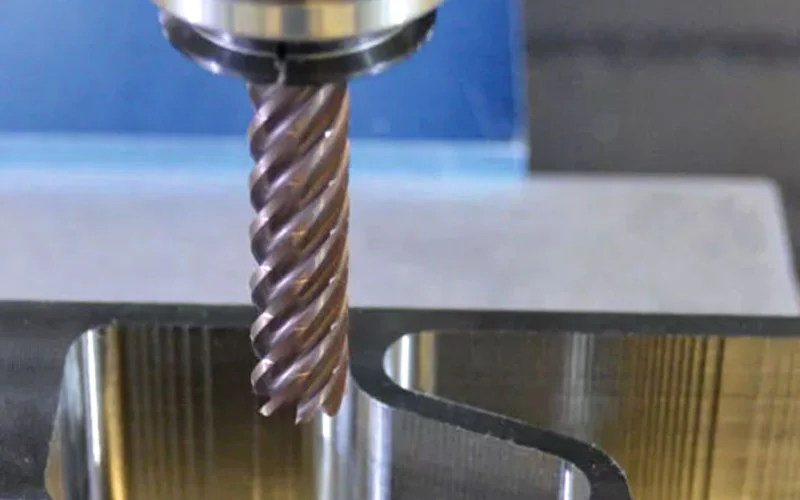
The A&M Industrial Metalworking Team has identified the most common end mill problems, along with their likely cause and solution. Utilize the handy chart below to troubleshoot your end mills at a glance, and contact out metalworking team for speed and feed recommendations, coating recommendations, product selection assistance and more.
| Problem | Likely Cause | Likely Solution |
| End Mill Edge Chipping |
Feed rate is too aggressive in both the continued machining and on initial cut. | Reducing the overall and initial feed rate will decrease the aggressiveness of the cut.* Decreasing axial and/or radial depth of cut is another solution for overly aggressive tool paths. |
| Tool Breakage | Aggressive feed rates and excessive DOC (depths of cut). Extreme tool overhang. Chip packing. Use of an excessively worn end mill. | Reduce feed rate and axial/radial DOC. Hold end mill shank deeper or opt for a shorter end mill. Adjusting speeds and feeds, increase coolant or air pressure to properly flush chips. Resharpen/regrind or replace end mill when excessive wear becomes apparent. |
| Premature Tool Wear | Cutting speeds are faster or slower than recommended for the tool. Proper tool coatings are not utilized. | Adjust cutting speeds to fall within manufacturers speeds and feeds charts.* Utilize the proper coating for your application or workpiece material.* |
| Chatter (Vibration) | Rigidity and aggressive tool paths. Utilizing improper tool geometry. | Reduce speeds and feeds, as well as axial and/or radial DOC. Hold end mill shank deeper or opt for a shorter end mill. |
| Excessive Burs | Use of incorrect speeds and feeds. Use of incorrect helix angle. | Adjust speeds and feeds to fall within manufacturers recommendations. Use correct helix angle.* |
| Poor Finish | Use of incorrect speeds and feeds. Use of excessively worn end mill. | Adjust speeds and feeds to fall within manufacturers recommendations.* Resharpen/regrind or replace end mill when excessive wear becomes apparent. |
| Short Tool Life |
Cutting friction is too great. | Adjust speeds and feeds to fall within manufacturers recommendations.* Resharpen or regrind the end mill or replace end mill when excessive wear becomes apparent. |
| Galling Or Welding | Not enough chip clearance. Not enough coolant. Cut is too heavy. | Direct coolant at the point of cut.
Decrease width of cut. Use end mill with less flutes.* |
| Poor Performance During High Speed Applications |
Tool material is not heat resistant. | Use a solid carbide end mill for high speed applications on difficult-to-machine materials including cast iron, non-ferrous metals, alloys and plastics. |
*Contact our metalworking team for speed and feed recommendations, coating recommendations, or product selection assistance.