How To Choose The Right Pipe Wrench For The Job
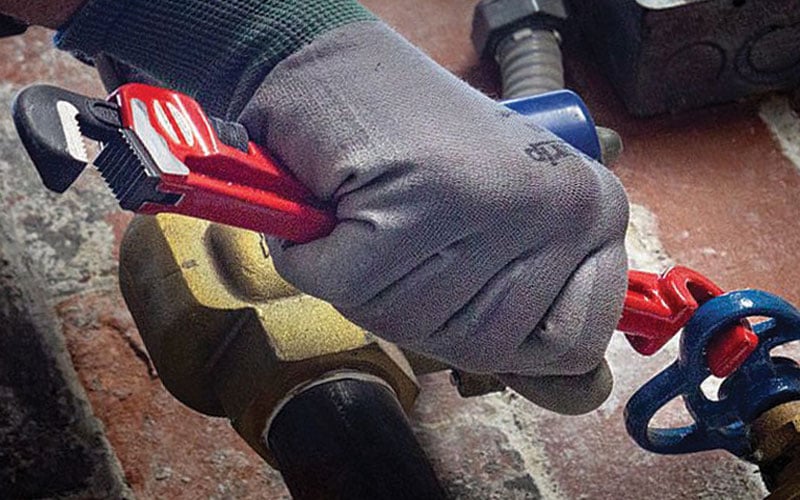
When it comes to pipe work — plumbing, industrial piping, oil & gas, or general maintenance — having the correct pipe wrench can make all the difference. Choosing the wrong wrench can result in poor grip, slippage, damage to the pipe or fitting, or even safety issues.
A pipe wrench, also known as a Stillson wrench or plumber’s wrench, is an adjustable wrench that turns threaded pipe and pipe fittings for pipe assembly and disassembly. With so many differing types of pipe wrenches, it can be hard to choose the right pipe wrench for your application. Learn the differences between pipe wrench types, and what pipe wrench to use for your application, using below as your guide to selecting a pipe wrench.
Why Selecting the Right Wrench Matters
Using an inappropriate wrench may mean:
-
Insufficient leverage or grip, making the job harder or impossible.
-
Damage to threads or pipe surfaces, reducing reliability.
-
Increased wear on the tool, shortening its life.
-
Safety hazards from slippage or tool breakage.
By contrast, when you pick the right REED pipe wrench:
-
You get optimal grip, leverage and control.
-
Reduced risk of damage to pipe surfaces or fittings.
-
Long tool life and reliable performance.
-
Safer working conditions.
Understand the Key Variables Before You Choose A Pipe Wrench
Size & capacity of the pipe / fitting
You’ll want a wrench that can properly engage the pipe diameter and provide the necessary torque. REED lists capacities for each model so you can match the pipe size. For example: “Pipe Capacity: 1/8″ – 2″ O.D.” for a 12″ straight heavy-duty model.
Access & reach
Is the pipe in a cramped or awkward space? Are you working on an end fitting or a run in open space? The access determines whether you need straight, offset, chain/strap type wrenches (more on these below). The A&M Industrial article points out the differences.
Material / surface of the pipe
Some pipes or fittings are polished, plastic, or otherwise easily marred. In such cases you might need a wrench that grips without damaging the surface (e.g., strap type).
Load / torque requirements
Heavy-duty applications (large diameter pipe, high torque) require wrenches built for heavy loads — hardened steel jaws, high-tensile iron or alloy handles.
Ergonomics & ease of use
Especially for long runs or repeated use, the ergonomic factor matters: handle length, weight, ease of repositioning, ability to use ratchet or chain functions, etc.
What type of pipe wrench should I use? What are the differences between pipe wrenches?
There are a variety of pipe wrenches, each designed for specific tasks or for use within specific spaces or plumbing set-ups.
Straight Pipe Wrench
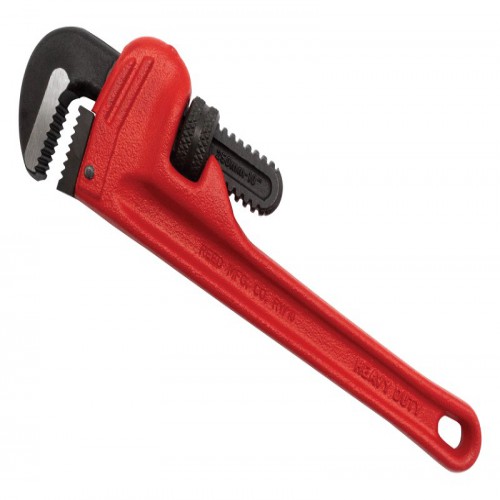
A straight pipe wrench is typically made of iron and has self-cleaning threads. The head of a straight pipe wrench is parallel to the handle, allowing greater control and leverage. REED heavy-duty, straight pipe wrench features a solid steel pin in the heel jaw, a high-tensile ductile iron handle, and hardened alloy steel parts for added strength and durability.
Best for: General purpose piping work, where you have clear access, moderate size pipe, and need reliable torque and grip.
Considerations: Choose the correct length to match the pipe size; longer handles give more leverage but more space required.
Offset Wrench
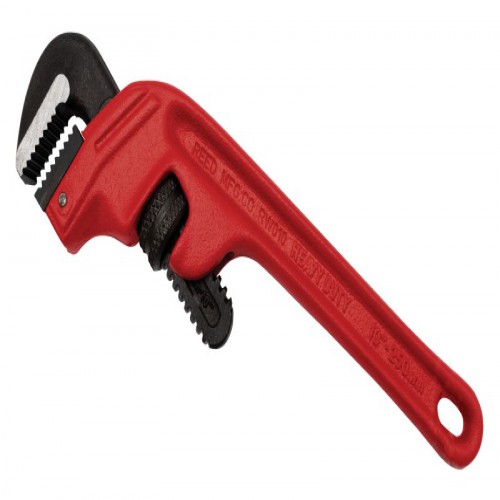
Offset Wrenches provide longer swing and better access to tight, hard-to-reach places. An offset wrench has a box-shaped end that can be used vertically, allowing access to the bolt directly from a vertical position. REED Offset Wrenches feature a solid steel pin in the heel jaw, a high-tensile, ductile iron handle, and hardened alloy steel parts for the strength required for the most demanding applications.
Best for: Environments where a straight wrench won’t reach easily — overhead piping, inside tight racks, vertical installations.
Considerations: Slightly less intuitive in feel than straight models; ensure you select correct offset length for your space.
Chain & Pin Pipe Wrench
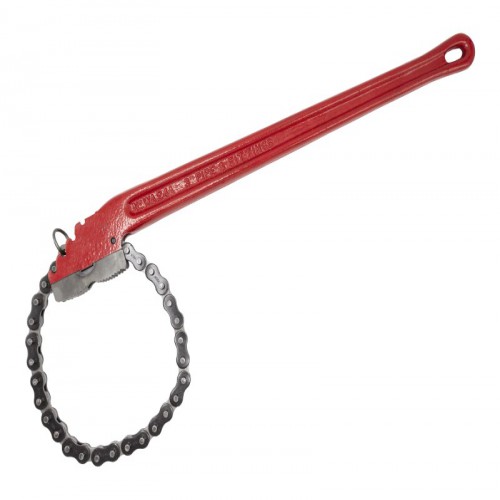
A chain and pin pipe wrench, also known as a chain wrench, has a unique design that utilizes a chain instead of a jaw. To use it, the chain is tightened around the pipe, providing safe, reliable, and powerful torque. Useful for all types of pipe fitting, from waterworks to plumbing, REED Chain & Pin Wrenches also feature dual, reversible jaws that allow ratchet action in both directions without removing the chain wrench from the pipe.
Best for: Large diameter pipes, irregular surfaces, situations where traditional jaw grip won’t work (e.g., coated or non-flat surfaces).
Considerations: Requires space around the pipe to wrap the chain; chain must be properly seated and tensioned to avoid slipping.
Strap Pipe Wrench
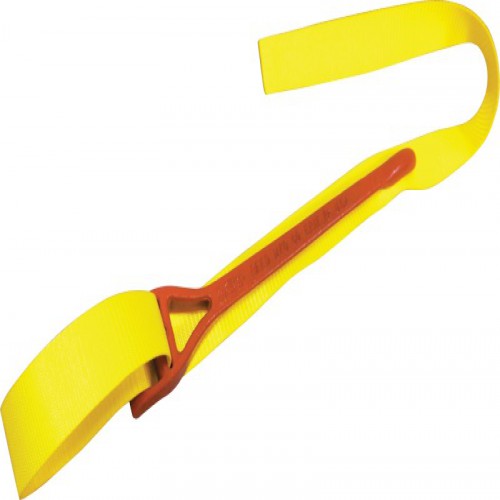
A strap pipe wrench provides gripping power without scratching or deforming plastic or polished metal pipe. This wrench grips a pipe by utilizing a strap that is being pulled in tension around it. Strap wrenches feature a ductile iron handle and extremely strong polyester strap, allowing use on large diameter pipes.
Best for: Sensitive pipe materials (plastic, polished metal), large diameter pipe where traditional jaws might not grip safely, or when pipe surface must not be marred.
Considerations: The strap must be maintained and replaced when worn; less torque capability than heavy-jaw models in some cases.
End Pipe Wrench
End Pipe Wrenches are designed to access hard to reach end pipes. These wrenches feature teeth on the jaw that provide a better, slip-resistant grip.
Best for: Tight clearances or close-to-wall applications — The head of an end pipe wrench is angled (usually about 90° to the handle), allowing it to grip pipe ends or fittings that a standard straight wrench can’t reach. Ideal for work in confined spaces against walls, under sinks or behind pipe racks.
Considerations: The end pipe wrench's 90° head means you must approach the pipe from the end, not the side. Make sure you have enough access room to seat the jaws securely. Because of the shorter handle and head geometry, end wrenches offer less leverage than standard straight wrenches. They’re more ideal for smaller diameters or finishing/tightening, not for breaking large fittings loose.
Compound Leverage Wrench
Compound Leverage Wrenches are designed to free locked or damaged couplings. The design of this wrench increases the turning force and torque applied to the pipe.
Best for: Breaking seized or frozen joints — Ideal for fittings that have rusted, been overtightened, or fused over years of use. Also well-suited for working on large diameter couplings or disassembling heavy duty piping systems commonly found in refineries, water treatment plants, and industrial maintenance.
Considerations: Compound leverage wrenches are engineered for extremely high torque. Always make sure the pipe or fitting can withstand the extra force to avoid cracking or thread damage. The dual-handle mechanism needs slightly more operating space than a single standard wrench. Ensure you have enough clearance to position and swing both handles. Because of the multiplied force, keep both hands clear of pinch points near the lever arms and avoid jerking movements — apply smooth, controlled pressure.
Common Mistakes to Avoid
-
Using too short a wrench for large pipe – You’ll lose leverage and increase risk of slippage or tool strain.
-
Using a straight wrench in a cramped/hard-to-reach space – This limits swing and may damage surrounding structure. Use offset instead.
-
Using serrated-jaw wrench on polished or plastic pipe – Risk of damaging the surface; strap or chain wrench would be better.
-
Neglecting tool maintenance – Worn jaws, damaged chain or strap reduce grip and increase accident risk.
-
Neglecting pipe condition – Old, corroded or rough-threaded pipes may require special care (compound leverage, lubrication, etc).
A&M Industrial is a full line distributor of REED Pipe Tools & Vises, and we stock a wide variety of wrenches and plumbing tools, workholding tools, threading tools, lubrication solutions, and more. For assistance selecting the right pipe wrench or REED product for your application, please call 800.864.2660 or contact the A&M Industrial Team.