How To Reduce Or Stop Machine Chatter
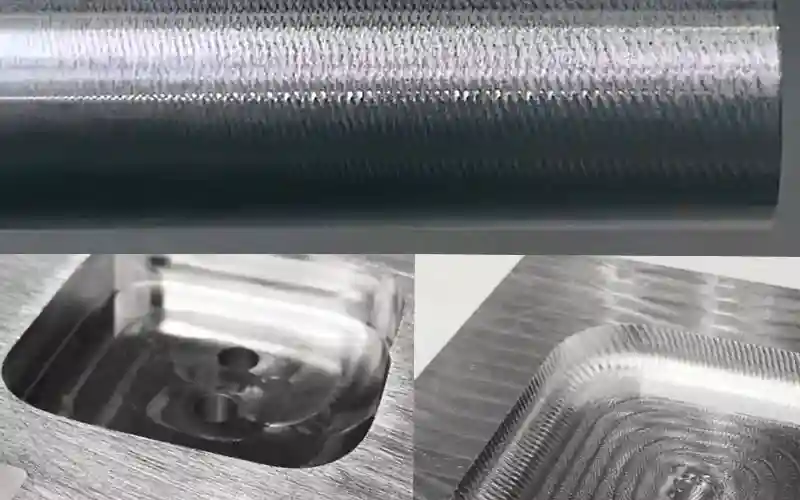
Machining operations can be disrupted by unintentional vibration known as "chatter," which occurs when the cutting tool interacts with the workpiece. Machine chatter can negatively affect productivity, tool life, and machining quality. Eliminating chatter helps produce higher-quality parts, maintain consistent tool life, and reduce scrap.
Understanding Chatter in Machining
Chatter occurs when an imbalance develops between the cutting tool and the workpiece during machining, causing vibration. As cutting forces reach resonance, self-induced vibrations occur. Chatter often produces loud noise and visible waviness on the machined surface due to inconsistent tool engagement and varying cutting loads. Two additional types of machining vibration include free vibrations, caused by sudden motion changes during rapid traverse, and forced vibrations, resulting from intermittent cutting by multi-tooth milling cutters or off-center workpieces on a lathe.
Consequences of Chatter in Machining
Machine chatter can negatively impact nearly every aspect of the machining process, including:
- Surface Finish: Chatter reduces surface finish quality and dimensional accuracy, often requiring additional finishing with abrasives to remove chatter marks, increasing labor, tooling, and production time.
- Cutting Tools: Uneven cutting forces accelerate wear on cutting tools, increasing the risk of premature tool failure, limiting reconditioning opportunities, and raising tooling costs.
- Workholding: Excessive vibration places additional stress on workholding systems, including vises and fixtures, requiring greater rigidity to maintain part stability.
- Machine Tools: Persistent chatter accelerates wear on machine tools, including bearings, gears, guideways, and spindle assemblies. Many machinists compensate by reducing speeds, feeds, or depth of cut, but these adjustments decrease metal removal rates and overall productivity.
Each component of the machining system—including the cutting tool, toolholder, workpiece, and machine tool—has different stiffness and damping characteristics. Excessive cutting forces can create dynamic instability, especially when machining with long, slender tools or thin-walled workpieces. While chatter cannot always be eliminated, it can usually be minimized by optimizing every part of the machining setup.
How to Reduce Chatter in Machining
Optimize Cutting Tool Selection
Cutting tools are often the primary source of chatter. Selecting the proper tooling for the application can dramatically improve stability.
- Choose the appropriate solid carbide end mill or indexable tool for the application.
- Select serrated (knuckle) or straight-edge cutting geometries based on cutting conditions.
- Use unequal flute spacing and variable helix end mills to disrupt harmonic vibrations.
- Use the shortest practical tool length to maximize rigidity.
- Select turning inserts or milling inserts with smaller nose radii, positive rake angles, and sharp cutting edges when appropriate.
- Choose entering angles close to 90° or lead angles near 0° when beneficial.
- Verify proper center height and rigid clamping, particularly in stationary turning applications.
Improve Workholding Rigidity
Rigid workholding is essential for reducing vibration. Well-designed fixtures should support weak features while resisting cutting forces. Secure the workpiece using rigid milling vises and properly selected vise jaws to eliminate movement during machining.
In milling applications, select the proper cutter pitch based on material, part geometry, and fixture rigidity. Maintaining the correct number of engaged teeth helps prevent harmonic vibration. Adjusting radial engagement, cutter geometry, or flute length can often eliminate chatter. For long tool overhangs, high-feed milling with a low entering angle helps reduce radial cutting forces.
Use the Right Toolholding System
Toolholders play a critical role in machining stability. Select holders with the shortest possible overhang and the largest practical diameter to maximize rigidity. For lathe tools, boring operations often require heavy metal or carbide boring bars when overhang exceeds standard steel bar limits.
Minimize Total Indicated Runout (TIR) by keeping spindles, collets, and holders clean and properly maintained. Reducing runout improves chip load distribution and cutting performance, especially in high-speed machining. When using modular tooling, minimize the distance between the spindle face and tool tip. Toolholders with taper and face contact provide increased rigidity for demanding machining applications with high radial cutting forces.
Summary
Machine chatter reduces productivity, shortens tool life, lowers part quality, and increases wear on machine tools. Successfully minimizing chatter requires optimizing the cutting tool, toolholder, workholding, machining parameters, and machine rigidity as a complete system.
Need Metalworking Tech Support?
Our metalworking specialists can help you select the right cutting tools, toolholders, and workholding solutions to reduce or eliminate machining chatter. Contact the A&M Industrial Metalworking Team for expert product recommendations and application support.