Lockout Tagout Basics
What is Lockout Tagout?
In 1989, OSHA introduced Standard 29 CFR 1910.147 The Control of Hazardous Energy in order to establish Lockout Tagout compliance requirements for general industry. Lockout Tagout (LOTO) is the process of controlling hazardous energy during the service and maintenance of machinery and equipment, de-energizing and securing equipment to prevent hazardous energy from being re-introduced during servicing or repair. This includes closing electrical circuits and valves, neutralizing extreme temperatures, securing moving parts, and more. These safety procedures safeguard employees from accidental injuries or even death.
Lockout
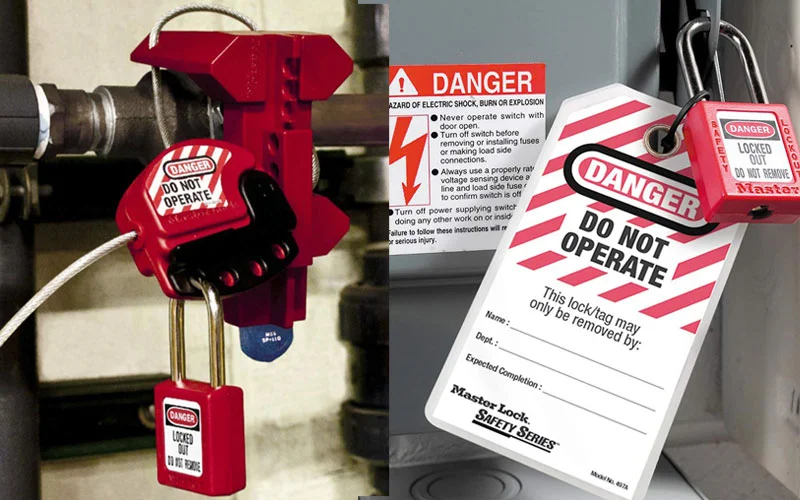
Lockout occurs when an energy source (electrical, mechanical, hydraulic, pneumatic, chemical, thermal or other) is physically isolated from the system that uses it (a machine, equipment or process). This is done using a variety of lockout padlocks and devices best suited for specific applications. Devices such as circuit breaker and electrical lockouts or valve lockouts can be used for more specific lockout jobs.
Tagout
Tagout is the process of affixing a label, or tag, that communicates information about what’s being done to the machine or equipment and why it’s important. The tag may communicate danger, instructions, timing of service, personnel performing the service, and more.
OSHA Requirements For Lockout Tagout Padlocks & Devices
The OSHA Lockout Tagout standard outlines 5 requirements that all safety padlocks and devices must meet. Master Lock Safety Solutions™ padlocks, hasps, portable lockout kits, lockout centers, valve lockout devices, circuit breaker and elctrical lockouts, and lockout tags were designed to meet all of these requirements:
| OSHA Requirement | Description | Master Lock LOTO Products |
|---|---|---|
| Durable | Manufactured with materials that withstand usage environment | X |
| Substantial | Cannot be removed unless considerable force is applied | X |
| Standardized | Clearly differentiated from other devices by color, shape or size | X |
| Identifiable | Indicates the authorized employee that applied the device | X |
| Exclusive for Safety | Not to be used for purposes other than controlling energy | X |
Why Comply With Lockout/Tagout Standards?
The Control of Hazardous Energy has been listed within OSHA‘s top 10 most frequently cited standards for several years. Non-compliance with this standard has resulted in thousands of worker related injuries and even deaths. Lockout Tagout (LOTO) procedures are utilized to protect employees from the dangers of hazardous energy and ensure they go home safely every day.
How to Implement a Lockout Tagout System
The 1910.147 standard stated above establishes requirements for facilities to implement and employees to follow. In order to keep employees safe and to comply with the OSHA standard, facilities must:
- Develop – Create a Lockout/Tagout program specific to the machinery in your facility, including equipment that is not capable of being locked out
- Implement – use Lockout Tagout devices – lockout devices for equipment that can be locked out and tagout devices to identify who is performing maintenance
- Train – teach employees how to properly utilize Lockout Tagout devices, Lockout Tagout procedures, and be sure authorized employees can perform the procedure accurately
- Enforce – monitor and maintain that the implemented procedures are being performed
- Inspect – Lockout Tagout procedures as well as employees should be audited at least annually
For assistance implementing Lockout Tagout in your facility, or developing and/or updating your facility's Lockout Tagout (LOTO) procedures, contact the A&M Industrial Safety Team. A&M Industrial works closely with our trusted partner, Master Lock®, to identify both the Lockout Tagout (LOTO) procedures and devices that are best suited for your facility and operations.